

Living DNA review: This DNA test kit offers surprising detail - andersonbrothad
The newest player in at-home DNA testing, Living DNA claims to embody the "world's nearly advanced DNA test." Not only does the company provide a report along your ethnic descent, but it also offers information on your maternal and paternal ancient ancestors.
Living DNA calls itself a troika-in-one DNA test, as information technology inspects there parts of your Deoxyribonucleic acid: your autosomes, yDNA from your father, and mtDNA from your mother. Withal, be aware that only males inherit yDNA from their fathers, so women will only drive results based connected autosomes and mtDNA.
The yDNA from your father and mtDNA from your mother allow you to explore what Living DNA calls "direct line." By matching your yDNa and mtDNA with inherited variations found over clip in ancient mass, Living DNA can square up which haplogroups you belong to. (A haplogroup is a solidifying of people World Health Organization share genes with an ancient common ancestor, direct either the fatherline or motherline.)
Like former ancestry tests, Living DNA tests your autosomes (chromosomes you share with relatives happening some sides of your family) to figure out out your past ethnic ancestry. This type of test dismiss match you with relatives leading to ten generations apart. Living DNA's family matching system is still in genus Beta, simply they do already offer a direction to explore your ancestry through migration history and heathen estimates.
 Keep Desoxyribonucleic acid
 After sending off your try out, you'll in time have your results digitally.
Where Realistic DNA stands forbidden is the amount of detail offered in its results, delivering more interesting visualizations and written material close to your ancestors. It's too the get-go to illustrate 21 specific submarine sandwich-regions of the UK your Desoxyribonucleic acid may come from. (In comparison, AncestryDNA has 13 regions.) Other countries have sub-regions, too, with more on the mode.
Note: This review is break of our best DNA test kit roundup . Go at that place for details about competing products and how we tested them.
Desoxyribonucleic acid Collection
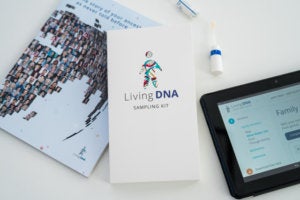
Extant DNA's kit collects your DNA sample through a cheek swob. The process is simple and straightforward, with few steps to deal with. Here's everything you'll find in the kit:
- Swab attached inside DNA preserving tube
- Specimen bagful
- Instruction booklet
- Mailer
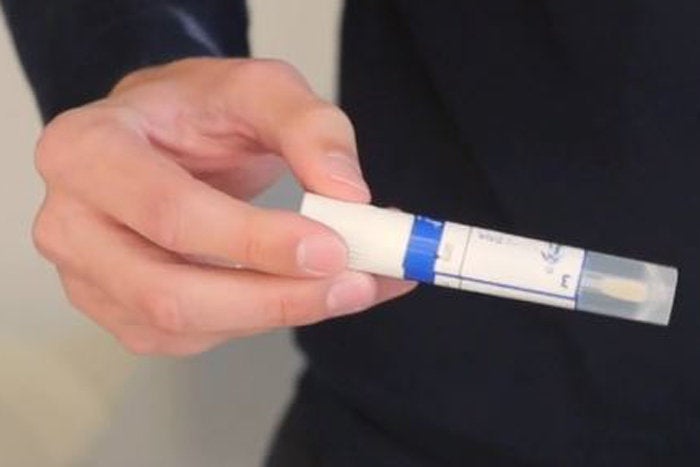
I found the 2-in-1 combination of swab and tube sturdy and well-organized. The overall process beats the heck out of spit-based tests, which requires having to spit over and over again once again in a transfuse. It also simply requires one mouth swab instead of two operating theatre more like the kits offered by competitors MyHeritage and GPS Origins.
 Living DNA
 Living DNA's 2-in-1 mouth swab and Desoxyribonucleic acid sample container was so cool.
Before you can swab your speak, make sure you don't eat, smoke, or drink caffeine for at least one hour because this can feign the lineament of the DNA sample. Alike other services, Living DNA besides recommends you have a light mouth so you might want to rinse and have water 30 proceedings in front taking the sample.
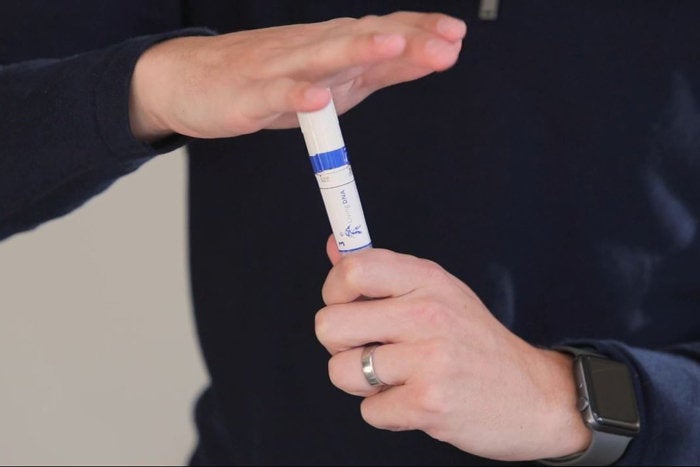
The unanimous process was very simple thanks to the 2-in-1 tube for collecting your DNA. Your DNA is constitute happening the insides of your cheek so you should use a firm anti-clockwise motion on some sides to cod it, qualification sure non to draw profligate. After you swab your cheeks, you seal the swab in the tube tightly and push it inward to release the drying mechanism to preserve the try out. Then you place a place a barcode on the tube, instal in the specimen bag, and send it off in the return mailer.
 Living DNA
 Make sure to adjure hard to let go the DNA preserving fluid.
Equal sure to activate your kit online so you can receive your results digitally. The cipher is found on the specimen bag, so jot it down or activate your account before sending off your sample.
Speed
Living DNA takes 6 to 8 weeks to extradite your results afterward your sample arrives at its lab. 23andMe, which provides similar reports, also takes between 6 to 8 weeks. AncestryDNA also takes 6 to 8 weeks and MyHeritage is the shortest at 4 to 6 weeks, but these tests examine less of your DNA.
Results
Living Desoxyribonucleic acid shines when it comes to the detail it offers in its results. You can explore your Deoxyribonucleic acid tarradiddle with a drift of panels that bring skyward colorful interactive visualizations and history on the ancient cultures you apportion your heritage with.
The Line empanel has three sections: Family Ancestry, Motherline, and Fatherline. The Home Ancestry panel's layout and selective information are very similar to what you get from nearly other DNA tests. It's divided further into four sections: Map, What Makes You, Graph, and Through History. These panels spring you a equipment failure of your pagan ancestry through interactive visualizations.
 Dieter Holger/IDG
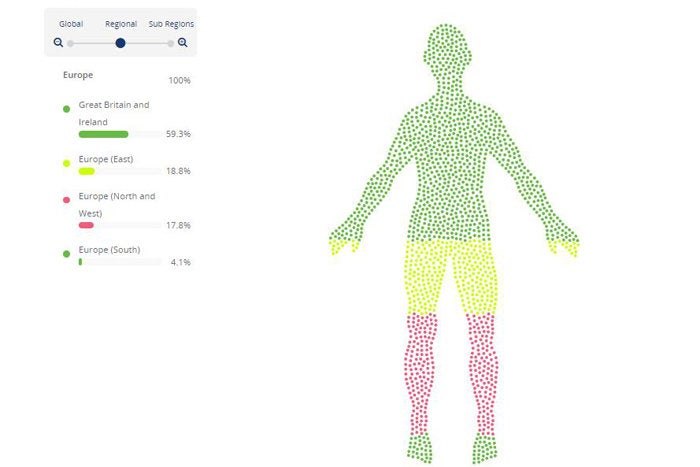
 Realistic DNA's What Makes You visualization.
What Makes You and the Chart instrument panel are two nontextual matter dividing up your social underestimate into a visualization of a physical structure. Using a skidder, you can look at your global, regional, and sub-regional heritage. Globose refers to large regions suchlike Europe and Africa and regional is organized by commonwealth or groups of countries.
Map shows the same information in a different way, allowing you to click along ethnicities to zoom into specific areas. Suchlike the previous two visualizations, you can also move between your global, regional, and sub-regional ethnic groups.
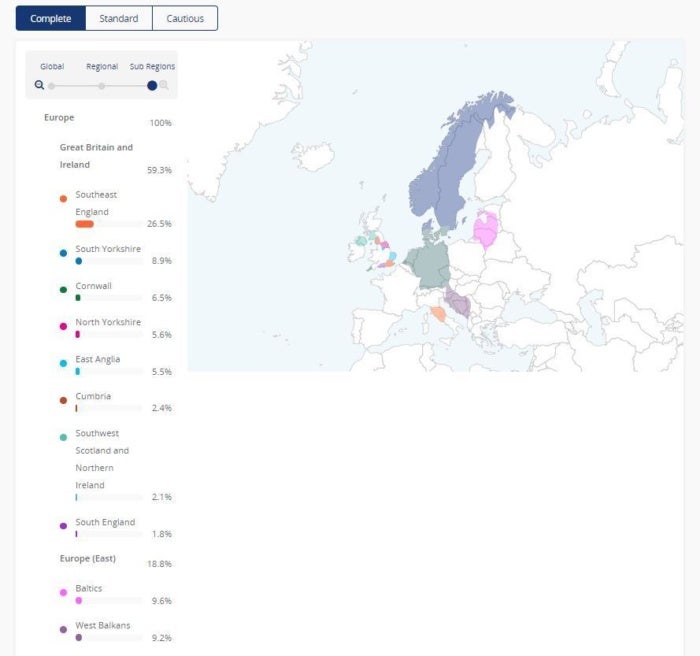
Living DNA's most unique feature is how it can provide specific information within a commonwealth for wedge-regional groups. Right now, Keep DNA provides the most detail for the UK, which can estimate your ethnic percentage for regions such as Cornwall and East Anglia. The company says information technology'll add more sub-regional breakdowns for past countries, care Germany and Italy, as time goes on.
 Dieter Holger/IDG
 You stern adjust the map's regions and how cautious the estimate is.
You butt too change the outlook between Clean, Acceptable, and Cautious. Absolute and Standard are essentially well-educated guesses about your ancestry, while Cautious claims to be the most accurate of the three based upon available genic science.
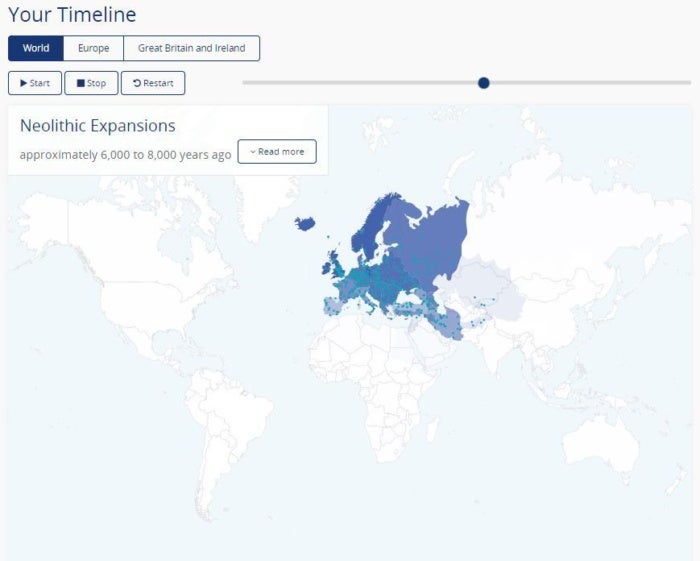
The final section, Finished History, charts your ancestors' migration patterns across the ages. You can hit play to watch your origin spread out across a world represent starting from 1,000 eld and sledding as far backbone as 80,000 eld. Information technology was very cool to consider tens of thousands of years play out in a minute, and information technology comes accompanied by a section that updates with historical information as the years progress.
 Dieter Holger/IDG
 Living DNA's Through History visualization was fun to watch.
My individual pagan reckon differed considerably from AncestryDNA and 23andMe's results, which named 40 per centum Oregon more of my ethnicity Eastern Samoa German and Scandinavian. In direct contrast, Living DNA pegged my Scandinavian ethnicity at 7.1 percent and Germanic pedigree at 10.7 percent—a surprising assessment, since all but of my family has been in Germany for generations and my father immigrated from there. I likewise believe it inaccurately estimated my British heritage at almost 60 percentage.
Only Keep DNA offers a parcel out more this ethnic breakdown in its Motherline and Fatherline sections. Both of these reports are dual-lane into four panels: History, Coverage Map, Migration Map, and Phylogenetic Tree. History is on the dot what it sounds like, providing a large writeup about the origins of your ancient ancestors on either your mother's operating room Father-God's side. Ostensibly, I descend from "the prototypic agriculturalists of the Neolithic Era" on my mother's side.
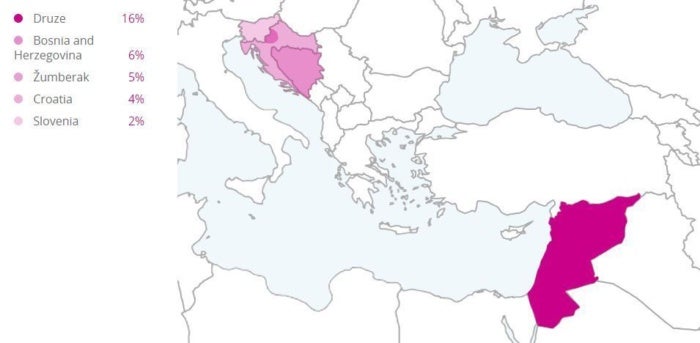
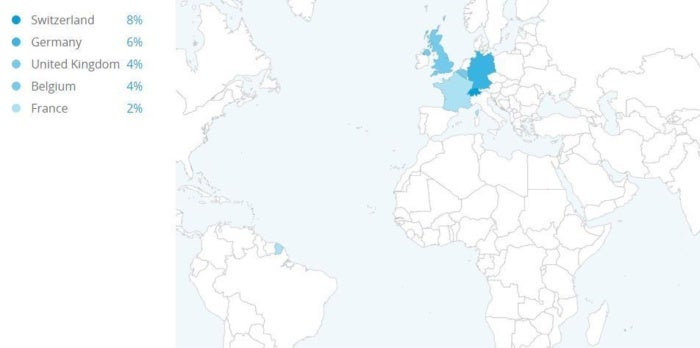
More stimulating are the Coverage Map out and Migration Map. The Coverage Map shows the areas where your mother's or mother's haplogroup originated from. (You might remember this from the intro, but to remind you: A haplogroup is a lay of masses who parcel Deoxyribonucleic acid with an ancient common ancestor from tens of thousands of years ago.) Some Living DNA and 23andMe situated me in subgroups of the unchanged haplogroups on my mother's and father's side, leading me to think both of these tests were fairly accurate.
 Dieter Holger/IDG
 The origins of my father's haplogroup.
 Dieter Holger/IDG
 The origins of my father's haplogroup.
Another interesting feature of the Motherline and Fatherline panels shows your antecedent's migration history geological dating up to 80,000 long time agone. IT begins in the point of meter where information technology's theorized we all share the same yDNA or mtDNA. Terminated time, this DNA acquired more variations as your ancestors moved across the world and had children. Live Deoxyribonucleic acid uses its genetic research to pinpoint and estimate the pathways your forebears took to the regions that your more recent ancestors hail from.
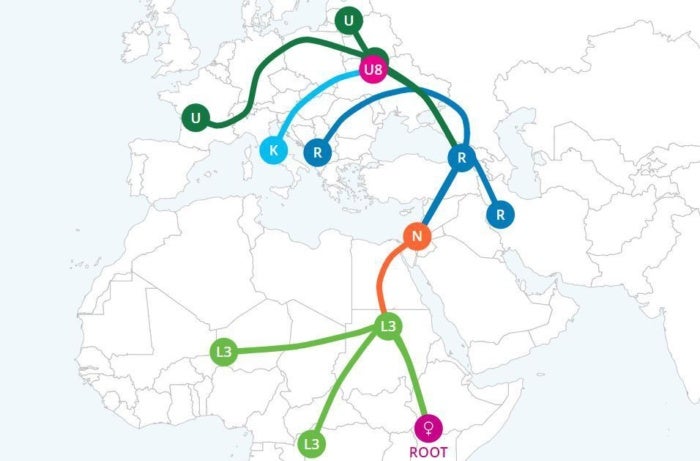 Dieter Holger/IDG
 My motherline's migration itinerary.
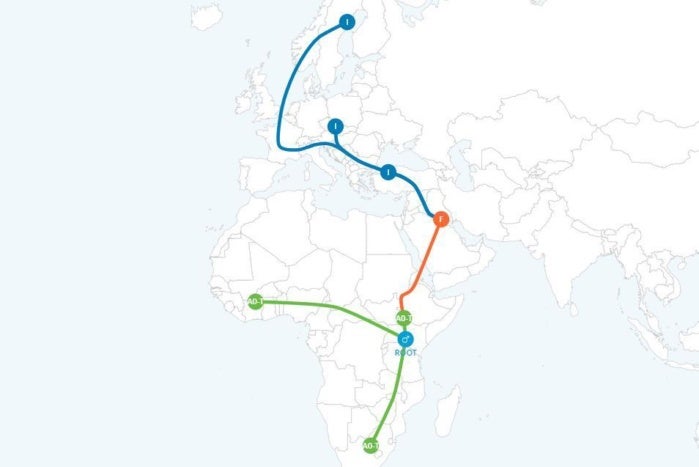 Dieter Holger/IDG
 My fatherline's migration road.
The terminal visualization is the Organic process Tree or your "biological process shoetree." This shows the path leadership to your put on in the evolutionary corner of life, with to each one node happening the tree representing a common ancestor. The last level, representing you, lists the subtype of your haplogroup expressed as an alphanumeric signature tune.
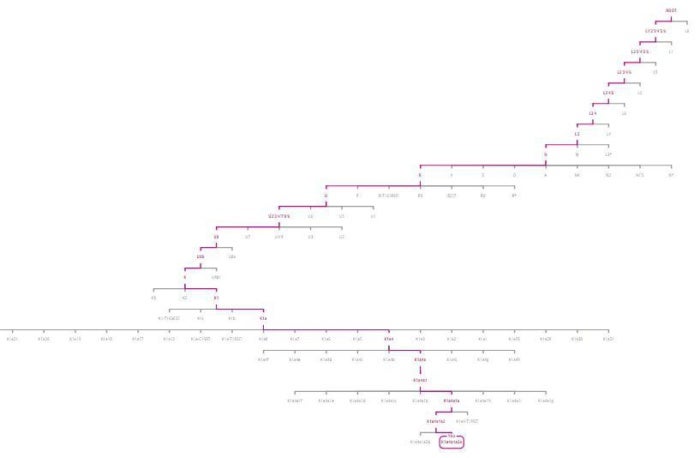 Dieter Holger/IDG
 My motherline's organic process tree.
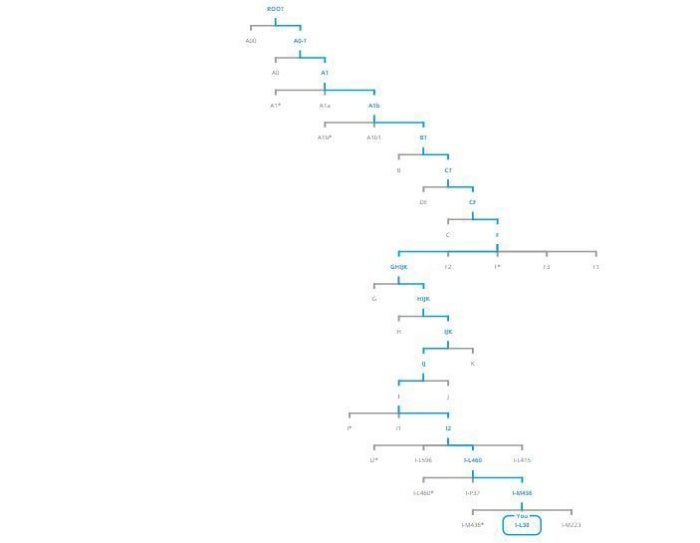 Dieter Holger/IDG
 My fatherline's phylogenetic tree.
For those World Health Organization want a sensual re-create of these results, People DNA offers an optional cocktail table leaflet for an extra $69. We didn't order it, and we'd hesitate to recommend it at that toll—these booklets don't follow with rough covers.
One feature missing from Living DNA is a system that matches you with inherited relatives. Rivals like AncestryDNA, MyHeritage, FamilyTree, and 23andMe all offer this alternative. Living DNA did tell United States of America it will before long add a fully-featured relative matching called Syndicate Networks, just at this time IT's only usable in beta. Equally of writing, nary matches have appeared in my panel.
Like other services, Living Deoxyribonucleic acid testament as wel allow you to upload raw DNA information from other tests to improve the particular of your results. Living DNA told PCWorld that uploading DNA reactionary now will only update your with genetic matches with relatives, but eventually, they'll also use this data to improve your ethnic breakdown.
Concealment
By default, Living Desoxyribonucleic acid doesn't share your DNA data with third parties without your express consent. The troupe also encrypts data exploitation the AES-256 orthodox, which should make the data really difficult to crack.
"DNA information is stored separately to any in person acknowledgeable information, and linked with an nameless key," a Living DNA spokesperson said.
If you do prefer to opt to share your data, Living DNA says information technology will be provided to "leading academic explore partners along projects that will benefit society," and that the company doesn't process with private research groups like pharmaceutical companies.
You behind subsidization and revoke your consent at whatsoever time. When you first-class honours degree sign up, you can opt-in at that prison term; to revoke it, attend the research dialog box and tick the box that says you preceptor't deficiency to enter.
If you decide afterward that you put on't want Living Desoxyribonucleic acid to keep your data and you want your sample destroyed, you'll have to email the party at help@livingdna.com with your request. (Unfortunately, there's no way to do this in the account settings.)
You can read to a greater extent about Support DNA's privacy insurance here.
Value
Aliveness Deoxyribonucleic acid costs $99, which is the same price A AncestryDNA and 23andMe, but $40 more than MyHeritage. Notably, Living DNA's matchmaking system is still in its early beta testing days, piece its competitors have Thomas More robust services. And so with the price being more or less the same than opposite competitors, what makes it worth it?
Despite not having a completed matching service yet, Living DNA provides a surprising amount of detail some your origins that AncestryDNA and MyHeritage doesn't. What's more, it offers extra inside information in the form of sub-regional breakdowns for the UK and says other regions outside the UK are en route.
Just overall, the test is in many ways a competitor to 23andMe, which has all the same features except the sub-territorial breakdowns. All the same, because Extant DNA is newer, information technology doesn't feel as dainty as 23andMe contempt costing the Lapp. Still, IT's a very well-put-together test and service, peculiarly if you're looking to get a line the hoagy-regions of countries where your more recent ancestors lived.
Editor's note: Because online services are often iterative, gaining new features and public presentation improvements over time, this review is topic to change in order to accurately reflect the current state of the service. Any changes to textbook or our final exam retrospect finding of fact testament be notable at the upside of this clause.

Source: https://www.pcworld.com/article/402899/living-dna-review.html
Posted by: andersonbrothad.blogspot.com
0 Response to "Living DNA review: This DNA test kit offers surprising detail - andersonbrothad"
Post a Comment